Exploring World History through geography
From the Cradle of Civilization to a Globalized World
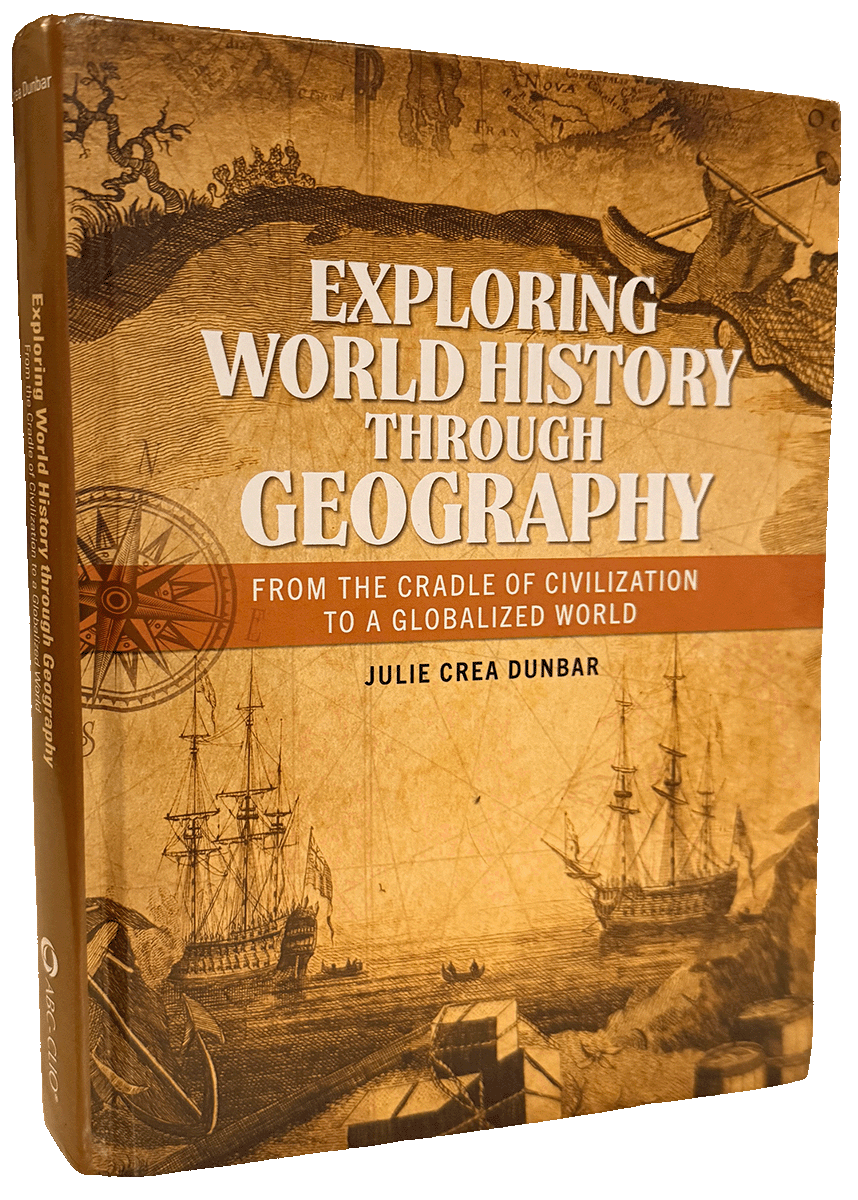
Not your run-of-the-mill world history tome, this book takes readers on a fascinating journey through time to examine world history through the closely related discipline of geography.
By Julie Crea Dunbar
From the early civilizations of ancient Mesopotamia to our present-day globalized society, readers will learn how humans interacted – and still interact – with the environment around them, as well as the environment's role in not only shaping the society's world view but enabling the building of socially stratified and successful civilizations. Additionally, the book examines how civilizations interacted with others, from developing cross-boundary trade to initiating wars of expansion. Finally, readers will also understand the impact of the study and application of geography, such as the creation and use of maps and the study of cultures and Earth's processes.
Readers will come away with a new understanding of the relevance of geography to not only human history but contemporary events, as well as their day-to-day lives. By presenting this history from a slightly different, geographic point of view, this book will inspire fresh curiosity in the world, both past and present.
About the Book
About the Author
Julie Crea Dunbar is a writer, fine art photographer, and publishing veteran with more than 20 years of experience in social studies and geography publishing. As an editorial manager and acquisitions editor for ABC-CLIO | Bloomsbury, she has stewarded numerous reference titles exploring global history, geography, and world cultures.
Holding degrees in human geography (CU Boulder) and creative writing (Naropa University), Julie blends deep historical context with creative visual storytelling both on the page and behind the camera.
“This book provides a fascinating geographic perspective on world history, which makes each topic more tangible and relevant. Geography provides the context and underscores why local people, places, and environments matter. This book deftly merges geography and history to make the immense topic of world history relatable to modern readers.”
―Dr. Leslie A. Duram, Professor of Geography, Southern Illinois University Carbondale